
Crop Farm Manager

Wishlist Share

About Course

A productive crop farm needs more than a planting plan. Someone must organise the work, monitor what is happening in the field and respond when conditions change. That is the role of a crop farm manager.

This course introduces learners to the practical work of managing crop production. They will practise planning a crop cycle, organising labour and inputs, supervising field activities, monitoring crop health, keeping farm records and preparing for harvest. They will also learn how to spot problems early and make decisions that protect yield, quality and costs.
The course is designed for aspiring farm managers, farm supervisors and agribusiness employees responsible for day-to-day crop operations.

Show More

What Will You Learn?

  • Write a useful farm brief
  • Separate duties from approval authority
  • Choose evidence for a manageable improvement project
  • Plan backwards from an agreed outcome
  • Check dependencies and resource availability
  • Maintain an approved plan when conditions change
  • Use a readiness check before establishment
  • Control seed and seedling identity
  • Record establishment and investigate gaps
  • Brief work in simple clear terms
  • Check labour effort and accepted output
  • Close the day with an honest handover
  • Receive and issue inputs with traceable records
  • Reconcile expected and physical stock
  • Plan replenishment without guessing a crop rate
  • Check delivery of an approved technical plan
  • Keep product and nutrient units distinct
  • Escalate interruptions with useful evidence
  • Collect a clear scouting record
  • Distinguish observation from diagnosis
  • Coordinate authorised action and release controls
  • Check harvest readiness and release
  • Reconcile product mass and grades
  • Link dispatch to a field and harvest lot
  • Separate income contribution and cash
  • Check a farm cost record
  • Use a simple alternative budget honestly
  • Define a measurable KPI
  • Write a concise evidence-based report
  • Use reporting to assign and follow actions
  • Write and test a usable SOP
  • Design a small improvement test
  • Prepare an evidence-based project handover
  • Match work samples to a vacancy
  • Use AI for truthful CV and interview practice
  • Choose a realistic supervised growth plan

Course Content

Module 1: Understand the Farm Before You Manage It
In this module, you will write a useful farm brief; separate duties from approval authority; choose evidence for a manageable improvement project. You will use the Nuru Fields case and add a practical work sample to your project.

  • Lesson 1: Introduction
  • Lesson 2: Understand the Farm Before You Manage It in Practice
    05:01
  • Lesson 3: Resource The Farm and Its Decision Makers
  • Lesson 4: Practice Build Your Farm Work Sample
  • Lesson 5: Discussion
  • Module 1 Understand the Farm Before You Manage It Check

Module 2: Turn the Crop Plan into a Working Season Plan
In this module, you will plan backwards from an agreed outcome; check dependencies and resource availability; maintain an approved plan when conditions change. You will use the Nuru Fields case and add a practical work sample to your project.

Module 3: Prepare the Field and Establish the Crop Carefully
In this module, you will use a readiness check before establishment; control seed and seedling identity; record establishment and investigate gaps. You will use the Nuru Fields case and add a practical work sample to your project.

Module 4: Lead the Team and Verify Daily Work
In this module, you will brief work in simple clear terms; check labour effort and accepted output; close the day with an honest handover. You will use the Nuru Fields case and add a practical work sample to your project.

Module 5: Control Inputs from Purchase to Field Use
In this module, you will receive and issue inputs with traceable records; reconcile expected and physical stock; plan replenishment without guessing a crop rate. You will use the Nuru Fields case and add a practical work sample to your project.

Module 6: Coordinate Water Soil and Nutrition Work
In this module, you will check delivery of an approved technical plan; keep product and nutrient units distinct; escalate interruptions with useful evidence. You will use the Nuru Fields case and add a practical work sample to your project.

Module 7: Organise Scouting and Crop Protection Records
In this module, you will collect a clear scouting record; distinguish observation from diagnosis; coordinate authorised action and release controls. You will use the Nuru Fields case and add a practical work sample to your project.

Module 8: Manage Harvest Quality and Traceability
In this module, you will check harvest readiness and release; reconcile product mass and grades; link dispatch to a field and harvest lot. You will use the Nuru Fields case and add a practical work sample to your project.

Module 9: Check Farm Costs Sales and Cash
In this module, you will separate income contribution and cash; check a farm cost record; use a simple alternative budget honestly. You will use the Nuru Fields case and add a practical work sample to your project.

Module 10: Use KPIs and Reports to Improve the Farm
In this module, you will define a measurable KPI; write a concise evidence-based report; use reporting to assign and follow actions. You will use the Nuru Fields case and add a practical work sample to your project.

Module 11: Build a Repeatable Routine and Improvement Project
Build a Repeatable Routine and Improvement Project

Module 12: Present Your Skills and Grow into the Role
In this module, you will match work samples to a vacancy; use AI for truthful CV and interview practice; choose a realistic supervised growth plan. You will use the Nuru Fields case and add a practical work sample to your project.

Project Permission Project Submission and CV

Module 13: Final Assessment for Crop Farm Management
Check your ability to make practical management decisions from the course evidence. This is a dedicated assessment module, not another teaching module. Complete the project and CV according to the published course rules. The examination has 20 single-answer MCQs worth 20 marks.

Other and Further Learning Resources

Earn a certificate

Add this certificate to your resume to demonstrate your skills & increase your chances of getting noticed.
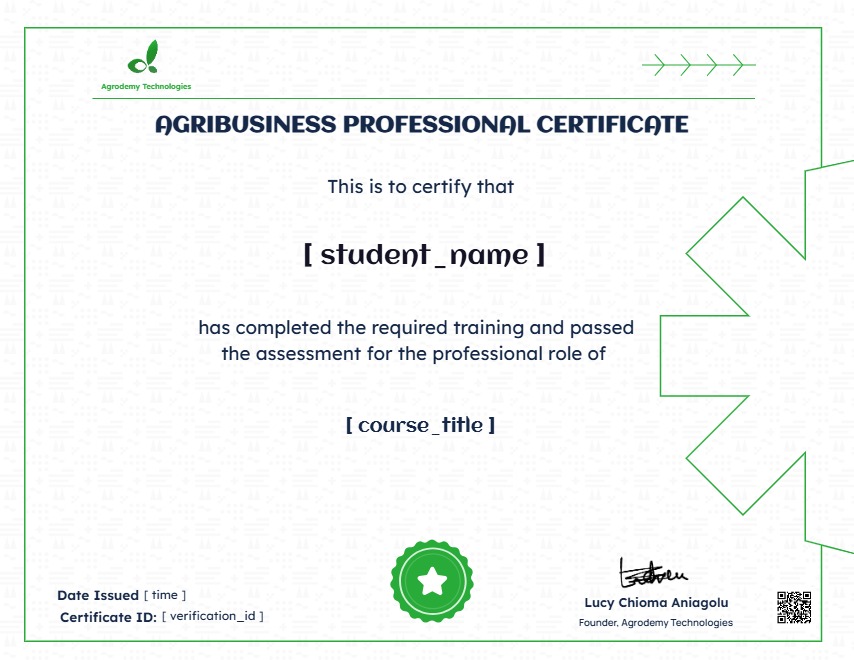
selected template

Student Ratings & Reviews

No Review Yet
No Review Yet

Want to receive push notifications for all major on-site activities?

✕
Select your currency
USD United States (US) dollar
Scroll to Top