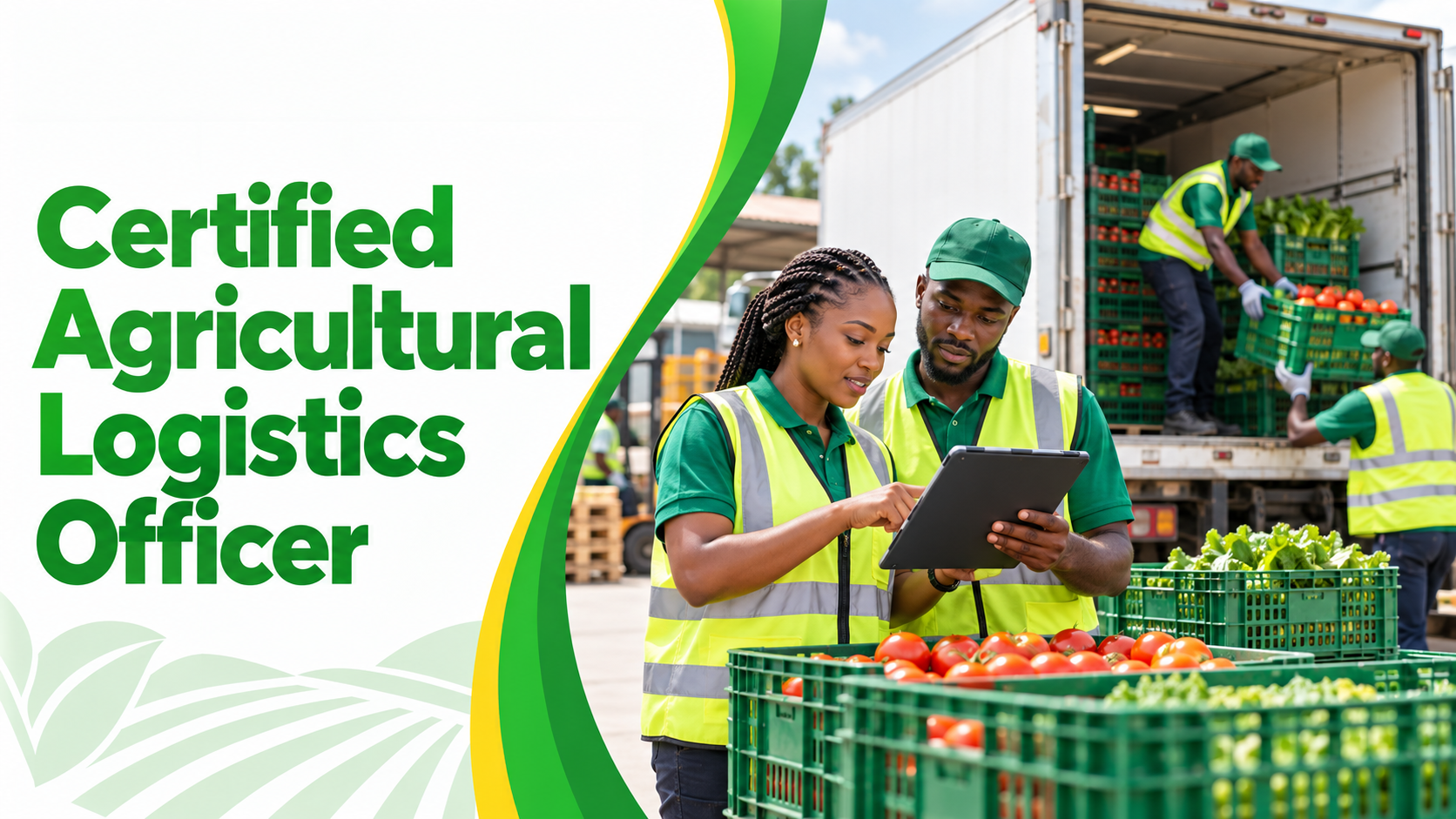
Agricultural Logistics Officer

Wishlist Share

About Course

A confirmed order can still fail if produce is collected late, handled poorly or sent to the wrong destination. An agricultural logistics officer plans and monitors the movement of products so they reach buyers in the right quantity and condition.
In this course, learners will practise scheduling collections and deliveries, preparing dispatch records, coordinating vehicles and drivers, checking quantities, and tracking shipments. They will also learn how storage, packaging and handling affect product quality, especially for perishable produce, and how to respond to delays or delivery problems.
The course is designed for aspiring logistics officers and agribusiness staff responsible for collection, storage, dispatch or delivery.

Show More

What Will You Learn?

  • Prepare a clear movement brief.
  • Distinguish expected, received, released, reserved and held stock.
  • Check product handling requirements with the authorised owner.
  • Maintain lot and location records.
  • Calculate gross cargo mass and test space constraints.

Course Content

Module 1: Understanding the Logistics Job and the Daily Handover
Follow an agricultural order from collection to delivery, identify who owns each decision, and turn a vague request into a usable movement brief.

  • Lesson 1: Introduction
  • Lesson 2: Understanding the Logistics Job and the Daily Handover in Practice
    05:18
  • Lesson 3: Movement Handover Map
  • Lesson 4: Read and Practise Understanding the Logistics Job and the Daily Handover
  • Lesson 5: Discuss
  • Module 1: Knowledge Check

Module 2: Receiving Produce and Recording What Actually Arrived
Compare expected, physically received and quality released quantities; record lot identity and discrepancies without hiding a shortage inside a receipt.

Module 3: Protecting Produce During Handling and Temperature Control
Choose handling checks from the product specification, recognise damage and exposure risks, and document a condition exception for the authorised quality owner.

Module 4: Organising Storage and Keeping Stock Records Accurate
Use locations, lot status, rotation rules and movement records to keep physical stock and available stock understandable.

Module 5: Planning Collections and Checking Load Capacity
Convert a collection or delivery request into a load plan using gross mass, package dimensions, usable space, compatibility and verified vehicle constraints.

Module 6: Scheduling Routes and Confirming Carrier Readiness
Build an achievable movement schedule, compare carrier offers on the same scope, and confirm vehicle, driver and receiving arrangements before departure.

Module 7: Controlling Picking Loading and Dispatch Documents
Match the authorised order, physical load and dispatch records, preserve lot identity and create a clear handover to the carrier.

Module 8: Tracking Trips and Reconciling Delivery Evidence
Maintain useful trip updates, capture proof of delivery and separate dispatched, received, accepted, held and unexplained quantities.

Module 9: Managing Delays Returns and Logistics Incidents
Contain a problem, preserve evidence, coordinate authorised decisions and keep returned goods or reusable packaging from being lost in the records.

Module 10: Measuring Logistics Performance and Writing Working Procedures
Calculate service and cost measures with honest denominators, explain exceptions and write a practical SOP that connects actions to records and decision owners. STAFF ASSET: 01_Thumbnails/M10_Thumbnail.png. Use for the module or main video opening where supported. Main video is not yet an MP4 deliverable. Build lessons in the following order.

Module 11: Building Your Logistics Portfolio CV and Interview Skills
Present the work you can demonstrate, choose relevant job descriptions and use AI to improve clear writing and interview practice without inventing experience. STAFF ASSET: 01_Thumbnails/M11_Thumbnail.png. Use for the module or main video opening where supported. Main video is not yet an MP4 deliverable. Build lessons in the following order.

Project Approval, Practical Project Submission and CV Submission

Module 12: Final Examination in Agricultural Logistics
Demonstrate that you can apply the core logistics concepts and calculations across a fresh set of short scenarios. The separate examination contains 20 single answer multiple choice questions worth 1 mark each, total 20 marks.

Further Learning and Course Closing

Earn a certificate

Add this certificate to your resume to demonstrate your skills & increase your chances of getting noticed.
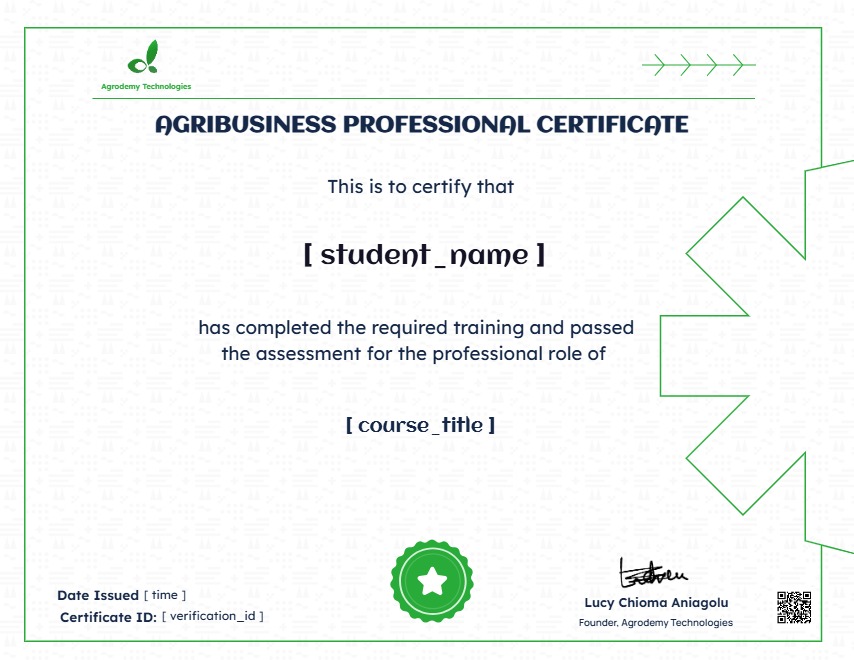
selected template

Student Ratings & Reviews

No Review Yet
No Review Yet

Want to receive push notifications for all major on-site activities?

✕
Select your currency
USD United States (US) dollar
Scroll to Top