
Agricultural Extension Officer

Wishlist Share

About Course

Help farmers turn agricultural knowledge into practical action. This course prepares learners to support farming communities through clear advice, hands-on demonstrations and consistent follow-up.
Learners will practise assessing farmers’ needs, planning field visits, organising demonstrations and explaining agricultural practices in simple language. The course also covers facilitating farmer groups, documenting observations, tracking adoption and referring technical problems to appropriate specialists. Examples will show how extension support can be adapted to local crops, conditions and resources.
Designed for aspiring extension officers, field officers, farmer trainers and agribusiness employees who work directly with farmers, this course builds practical skills in communication, training and farmer support.

Show More

What Will You Learn?

  • Prepare a service brief with clear units, authority and next actions.
  • Ask neutral needs questions and explain the limits of a small practice set.
  • Plan an accessible visit, budget and realistic alternative.
  • Design a practical demonstration, feedback and consistent task check.
  • Record observations and make referrals with ownership and communication closure.

Course Content

Module 1: The extension officer as a trusted learning partner
Understand the work, recognise the limits of your authority and agree a useful first brief with a farmer group.

  • Lesson 1: Introduction
  • Lesson 2: The extension officer as a trusted learning partner in practice
  • Lesson 3: The extension officer as a trusted learning partner visual review
  • Lesson 4: Read and prepare your working output
  • Lesson 5: Discussion

Module 2: Listen for needs and choose a useful priority
Prepare neutral questions, separate evidence from interpretation and choose a learning priority without treating a small sample as the whole community.

Module 3 Plan an inclusive visit people can attend
Translate the learning priority into an accessible visit plan with clear responsibilities, realistic costs and alternatives when conditions change.

Module 4: Facilitate a demonstration that builds a usable skil
Use a clear practice sequence, respectful questions and a small skill check to help participants perform and explain a defined observation task.

Module 5: Observe carefully and make a useful referral
Write a precise field note, recognise the limits of remote information and track a referral through response and communication.

Module 6: Keep useful digital records and clear messages
Build and test a small form, preserve record meaning and review AI-assisted messages before sharing.

Module 7: Follow up and learn why practice changes
Agree realistic follow-up, distinguish stages of practice and respond to barriers without pressuring participants to report success.

Module 8: Report performance without overstating impact
Calculate defined measures, explain missing data and costs, and turn a concise report into decisions and next actions.

Module 9: Build a tested workflow and a reviewable portfolio
Write a practical SOP, test a normal case and an exception, and assemble one coherent extension project for review.

Module 10: Prepare for extension work and keep learning
Connect your portfolio to real job requirements, use AI for truthful career preparation and plan further supervised practice.

Project approval portfolio and CV
Prepare one coherent extension-service portfolio using the supplied Amani case or an approved, permitted alternative. No live farmer contact, spending or public posting is required. Obtain scope approval first. The five approval marks are for a clear scope and learning question (2), appropriate permission or tutor-approved simulation route (1), explicit competence and referral boundaries (1), and a feasible evidence and data-handling plan (1). A learner cannot award their own approval. The portfolio is worth 30 marks. Submit: service brief and needs evidence (5); inclusive visit and facilitation plan with observable task and feedback approach (6); observation and referral records with ownership and closure distinctions (5); digital form test and traceable correction including AI verification where used (4); follow-up definitions and a checked report with compatible units and limitations (6); tested SOP, evidence index and your own three-to-five-minute explanation or accessible written equivalent (4). The parts add to 30. These are assessor criteria; keep detailed keys and marking notes out of learner-facing quiz fields. Include one material correction and its reason. For example, correct a duplicate attendance count, an unsupported AI outcome claim or an SOP step that allowed premature closure. If feedback came from a role-play or self-test, say so. Do not invent a farmer testimonial, signature or reviewer. Real work needs the actual permission, technical review and appropriate redaction before sharing. The CV submission is worth five marks: truthful relevant facts (2), clear link to role requirements (1), supported project examples with simulation labels (1), and readable structure with working contact or portfolio access as appropriate (1). Do not publish an applicant's contact details in learner materials. The course owner must set and publish pass thresholds, attempts, deadlines, reassessment and certificate conditions before enrolment. Test the LMS with full, zero and mixed scores. The grade must add raw components to 100 rather than average unrelated percentages. Practice tasks, discussions and modules nine and ten add no extra marks. Learner submission instructions Use a single indexed portfolio file or an organised folder permitted by the LMS. Include source references, your own explanation and a correction. Use the actual published file format, size, deadline and resubmission settings. Staff must set those fields after checking the installed LMS; do not copy unrelated default assignment points.

Module 11: Final assessment
Apply the course reasoning to fresh scenarios. This dedicated assessment module follows all ten teaching modules and the required project and CV workflow.

Earn a certificate

Add this certificate to your resume to demonstrate your skills & increase your chances of getting noticed.
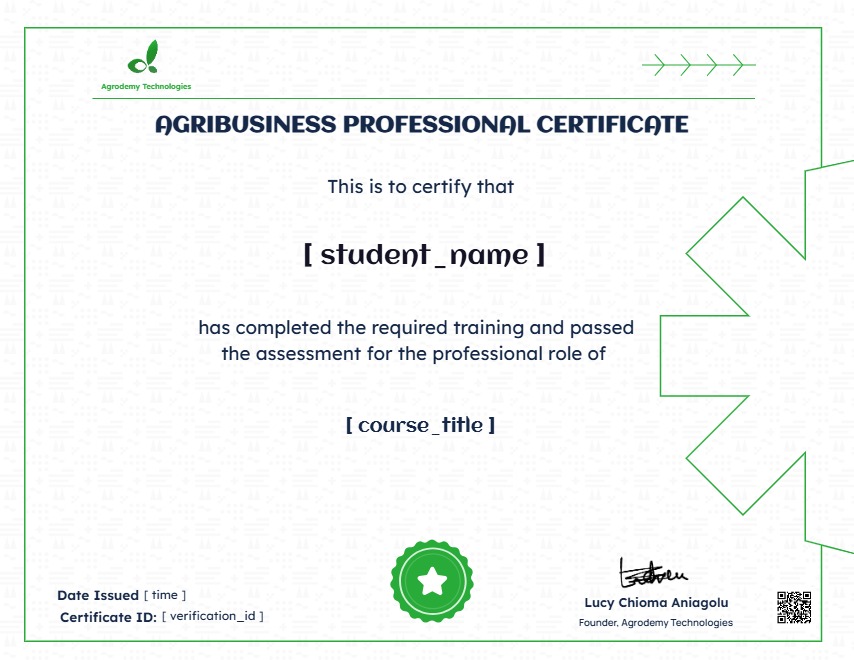
selected template

Student Ratings & Reviews

No Review Yet
No Review Yet

Want to receive push notifications for all major on-site activities?

✕
Select your currency
USD United States (US) dollar
Scroll to Top