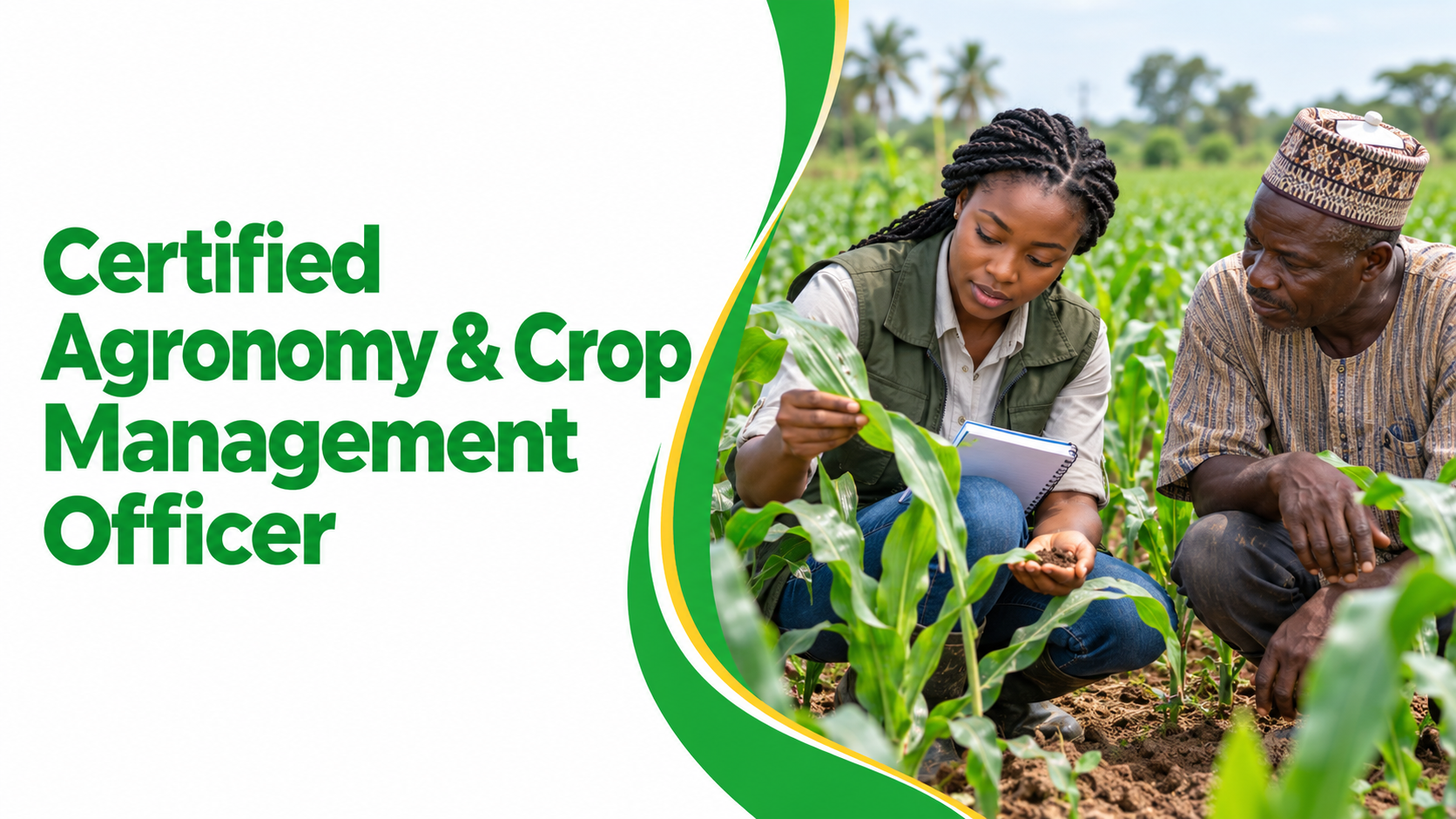
Agronomy and Crop Management Officer

Wishlist Share

About Course

When a crop is growing poorly, the cause is not always obvious. Soil conditions, water, pests, disease, seed quality and field practices can all affect the result. An agronomy and crop management officer observes what is happening, keeps useful records and helps the farm choose an appropriate response.
In this course, learners will practise assessing field conditions, monitoring crop growth, recognising signs of common crop problems and documenting what they find. They will learn to support planting and nutrient plans, recommend when specialist advice or testing is needed, and communicate practical actions to farmers and farm teams.
The course is designed for aspiring agronomy officers, field officers and crop production staff who want to strengthen their crop monitoring and advisory skills.

Show More

What Will You Learn?

  • Describe the officer role and its decision limits
  • Recognise field variation and sampling units
  • Distinguish germination, emergence and established plant population
  • Use observed crop stages alongside calendar dates
  • Build the evidence before choosing a product
  • Read the water story
  • Agree a scouting question and unit
  • Begin with prevention and a healthy crop
  • Define harvest readiness for the intended use
  • Make records usable by the next person
  • Choose a practical improvement question
  • Read the duties behind the title

Course Content

Module 1: The Agronomy Officer and the Field Brief
Practise the agronomy officer and the field brief using a realistic field situation. Describe the officer role and its decision limits. Produce a work sample with its evidence and limits visible.

  • Lesson 1: Introduction
  • Lesson 2: The Agronomy Officer and the Field Brief
    07:20
  • Lesson 3: Practical Reading – From field question to a checked recommendation
  • Lesson 4: Visual Guide
  • Lesson 5: Discussion
  • Module 1 Knowledge Check

Module 2: Reading the Site and Planning Soil Samples
Practise reading the site and planning soil samples using a realistic field situation. Recognise field variation and sampling units. Produce a work sample with its evidence and limits visible.

Module 3: Seed Quality and Crop Establishment
Practise seed quality and crop establishment using a realistic field situation. Distinguish germination, emergence and established plant population. Produce a work sample with its evidence and limits visible.

Module 4: Crop Stages and Field Operation Planning
Practise crop stages and field operation planning using a realistic field situation. Use observed crop stages alongside calendar dates. Produce a work sample with its evidence and limits visible.

Module 5: Plant Nutrition and Fertiliser Arithmetic
Practise plant nutrition and fertiliser arithmetic using a realistic field situation. Build the evidence before choosing a product. Produce a work sample with its evidence and limits visible.

Module 6: Water Management and Drainage Decisions
Practise water management and drainage decisions using a realistic field situation. Read the water story. Produce a work sample with its evidence and limits visible.

Module 7: Crop Scouting and Diagnostic Evidence
Practise crop scouting and diagnostic evidence using a realistic field situation. Agree a scouting question and unit. Produce a work sample with its evidence and limits visible.

Module 8: Integrated Pest Management and Intervention Records
Practise integrated pest management and intervention records using a realistic field situation. Begin with prevention and a healthy crop. Produce a work sample with its evidence and limits visible.

Module 9: Harvest Readiness Yield and Crop Quality
Practise harvest readiness yield and crop quality using a realistic field situation. Define harvest readiness for the intended use. Produce a work sample with its evidence and limits visible.

Module 10: Field Records Farmer Advice and Farm Economics
Practise field records farmer advice and farm economics using a realistic field situation. Make records usable by the next person. Produce a work sample with its evidence and limits visible.

Module 11: Field Improvement Projects and Performance Review
Practise field improvement projects and performance review using a realistic field situation. Choose a practical improvement question. Produce a work sample with its evidence and limits visible.

Module 12: Your Agronomy Portfolio CV and Next Steps
Practise your agronomy portfolio cv and next steps using a realistic field situation. Read the duties behind the title. Produce a work sample with its evidence and limits visible.

Cumulative Practical Project and Career Submission

Final Examination: Field Decisions and Evidence
Bring together the field reasoning from the course.20 multiple-choice questions,1 mark each, total 20. This is a dedicated assessment module. Keep the answer key staff-only. Use owner-approved attempt and pass settings.

Other and Further Learning Resources

Earn a certificate

Add this certificate to your resume to demonstrate your skills & increase your chances of getting noticed.
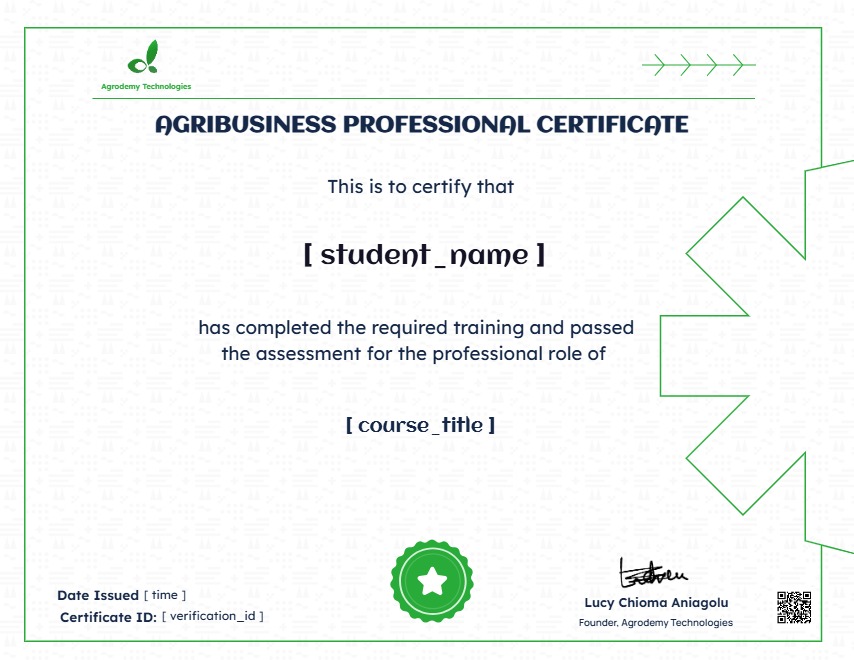
selected template

Student Ratings & Reviews

No Review Yet
No Review Yet

Want to receive push notifications for all major on-site activities?

✕
Select your currency
USD United States (US) dollar
Scroll to Top