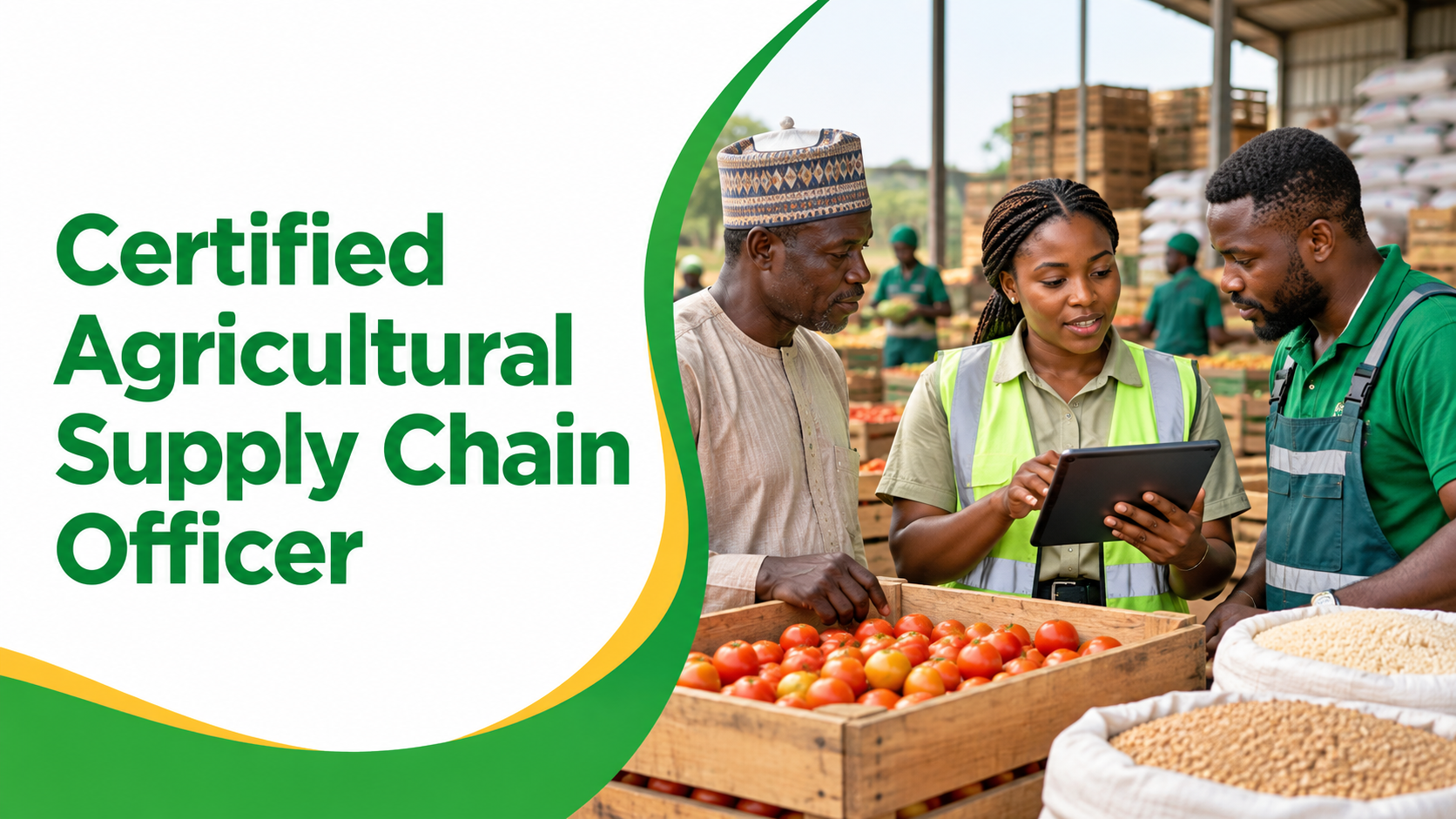
Agricultural Supply Chain Officer

Wishlist Share

About Course

A food processor may have buyers ready but still struggle to get the right raw materials at the right time. An agricultural supply chain officer helps connect suppliers, purchasing, stock and production so the business can meet demand.

In this course, learners will practise mapping an agricultural supply chain, assessing suppliers, planning purchases, checking stock levels and keeping clear procurement records. They will also learn to spot supply risks, respond to shortages and coordinate with the teams that receive, process or sell the products.
The course is designed for aspiring supply chain officers and agribusiness staff responsible for sourcing inputs or produce and keeping supply consistent.

Show More

What Will You Learn?

  • Explain the supply chain officer’s responsibilities
  • Map product information and decision handoffs
  • Agree a permitted practical project
  • Separate forecasts orders and approved demand
  • Calculate a net requirement with matching units

Course Content

Module 1: Understand the Role and Map the Supply Chain
Sales is promising an order, stores has a held lot and a supplier is saying that stock is available. Everyone has a piece of the picture. Your first job is to connect those pieces before the business makes a promise it cannot keep. In this module you will explain the supply chain officer’s responsibilities; map product information and decision handoffs; agree a permitted practical project.

  • Lesson 1: Introduction
  • Lesson 2: Understand the Role and Map the Supply Chain in Practice
    06:24
  • Lesson 3: Resource Who Sends What to Whom
  • Lesson 4: Practice Build the Connected Work Sample
  • Lesson 5: Discussion
  • Module 1 Understand the Role and Map the Supply Chain Check

Module 2: Turn Demand into a Clear Purchase Requirement
Now that we know who provides the information, let us answer the question the manager is waiting for: how much maize do we actually need to buy? A big total is only useful if we can explain where it came from. In this module you will separate forecasts orders and approved demand; calculate a net requirement with matching units; keep held stock and uncertain receipts visible.

Module 3: Check Timing Replenishment and Shortage Scenarios
The total now balances, but the production supervisor asks a better question: will the stock be here before we need it? This is where a plan can look comfortable on paper and still fail on Monday morning. In this module you will build a time-phased usable stock plan; explain reorder triggers and inventory position; show a shortage without inventing available supply.

Module 4: Assess Suppliers and Compare Purchasing Options
We know the quantity and the timing. Now two suppliers send quotations and a third offers an attractive price without the required specification evidence. Let us compare what the business can actually use, not just the smallest number. In this module you will write a clear quotation requirement; apply eligibility capacity and lot-size checks; compare stated costs and prepare a recommendation.

Module 5: Follow Purchase Orders and Reconcile Accepted Stock
The comparison is ready. Once the authorised buyer acts, your work changes from recommending to following a real commitment. A purchase order, a physical receipt and a quality acceptance are three different events. In this module you will distinguish draft approved and acknowledged orders; reconcile ordered received accepted and held quantities; keep discrepancies visible until authorised resolution.

Module 6: Keep Traceable Records and Clear Handoffs
An incoming lot is now under review. The manager asks where it came from and which later records refer to it. A folder full of forms is useful only if the references actually connect. In this module you will link supplier order receipt lot and downstream records; perform a bounded trace query; hand over information without changing authority.

Module 7: Respond to Supply Risks and Write Decision Briefs
A supplier delay is now confirmed. The business needs a response, but an urgent conversation can quickly become a set of guesses. Let us show the size of the gap and the decisions that can still be made. In this module you will write risks with triggers owners and actions; test feasible responses to a shortage; prepare a clear decision brief with limitations.

Module 8: Measure Supply Performance and Report It Fairly
The manager asks whether supply is improving. One person quotes order counts, another quotes kilograms and someone else averages two percentages. Before we make a chart, we need to agree what we are measuring. In this module you will choose KPIs with a clear decision purpose; calculate service forecast and stock measures; prepare a report that separates evidence and assumptions.

Module 9: Write Useful Supply Procedures and Control Records
A colleague is covering your desk tomorrow. They need to know which file is current, what to check and when to ask for help. This is a good test of whether your routine is clear enough to become a procedure. In this module you will write an SOP around an actual work decision; keep approval version and record controls visible; test a draft procedure with its intended user.

Module 10: Assemble and Explain Your Supply Coordination Project
You now have several useful records. Let us join them into one small project a manager can inspect, rather than a collection of screenshots that tell different stories. In this module you will connect the five practical outputs; check calculations status and source links; prepare one clear submission for human review.

Module 11 : Use AI and Digital Tools Without Losing Control
An AI tool can draft a polished supplier message in seconds. The difficult part is noticing when it has quietly changed a date, invented a confirmation or made a recommendation sound approved. In this module you will choose bounded AI tasks with safe inputs; verify calculations and status independently; keep an honest assistance and checking log.

Module 12: Prepare for the Job and Keep Developing Your Skills
You have work samples now. Let us turn them into an honest application and a practical growth plan, so an employer can see what you can explain today and what you still need to practise. In this module you will interpret related job titles and vacancy requirements; prepare a truthful CV portfolio and interview example; choose a realistic next learning or service step.

Project and CV Submission Requirement
Objective module checks and final examination are suitable for automatic scoring after testing. The project needs one human review against the rubric. Permission and CV use short checks. Discussions and cumulative practice are ungraded. Do not claim an objective quiz alone establishes workplace competence.

Module 13: Final Assessment
This dedicated final assessment module checks the planning purchasing record and decision skills taught in the course. The examination has 20 single-answer multiple-choice questions for 20 marks. Follow the published course rules for attempts timing and completion.

Other and Further Learning Resources
You now have a foundation you can practise.

Earn a certificate

Add this certificate to your resume to demonstrate your skills & increase your chances of getting noticed.
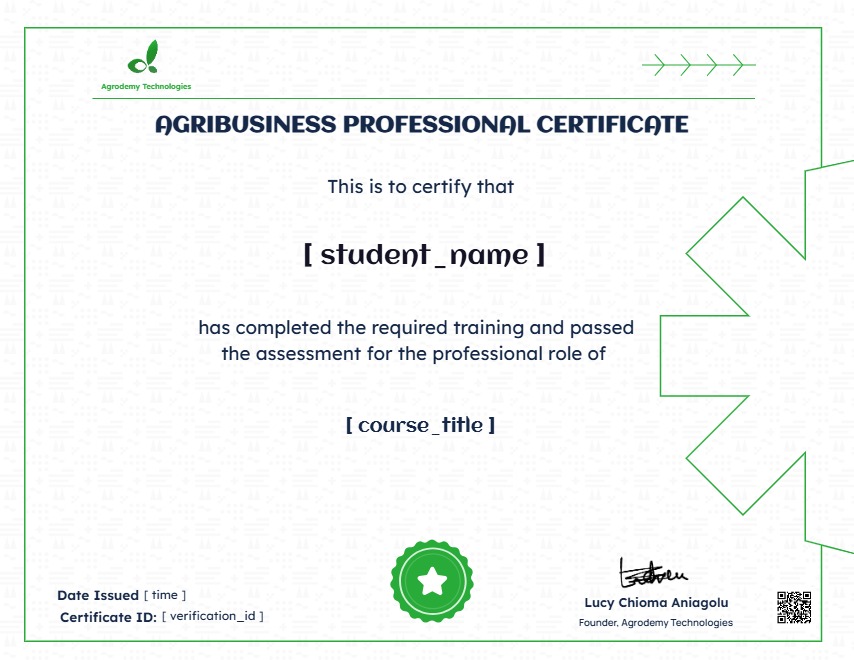
selected template

Student Ratings & Reviews

No Review Yet
No Review Yet

Want to receive push notifications for all major on-site activities?

✕
Select your currency
NGN Nigerian naira
Scroll to Top