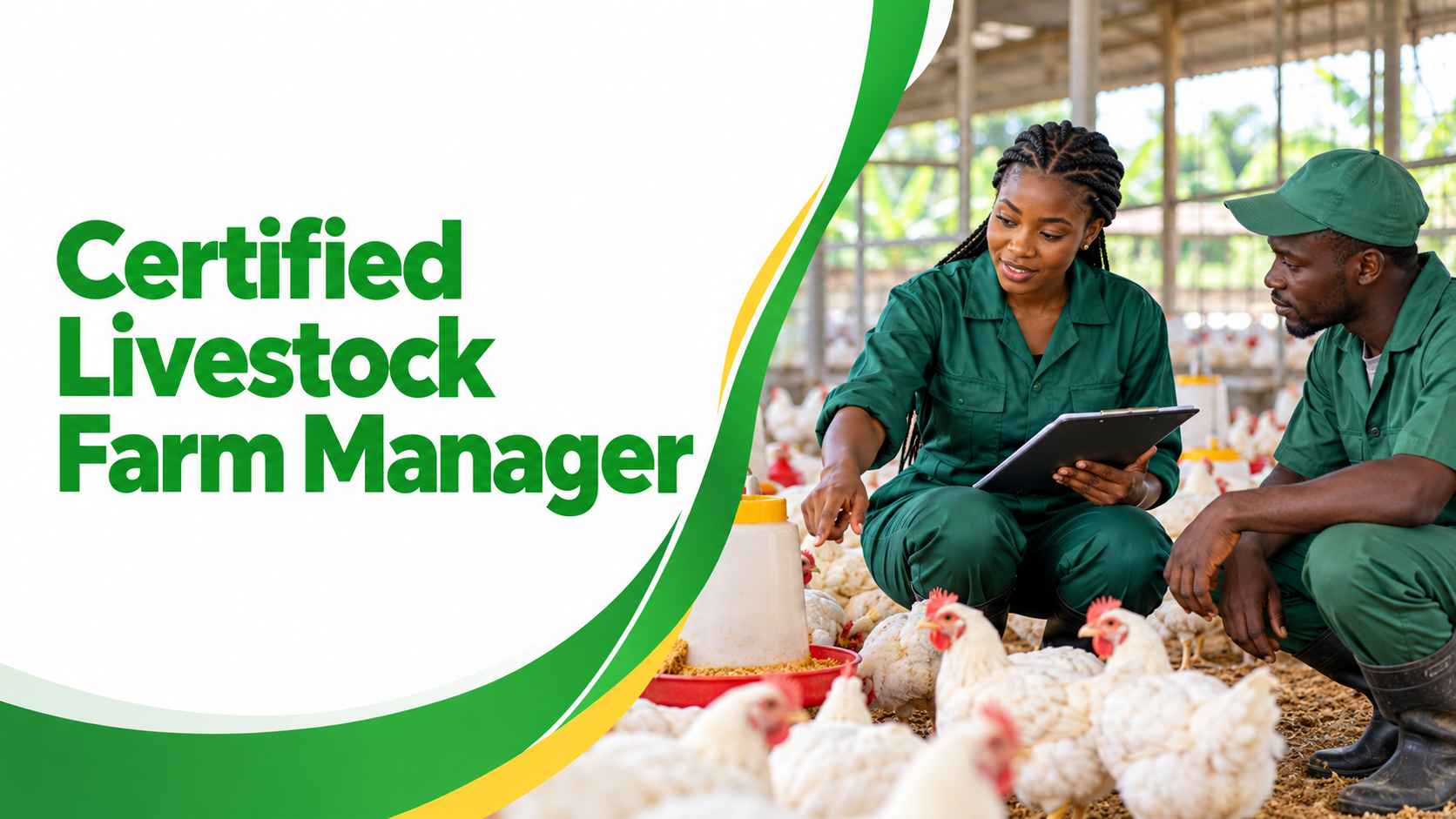
Livestock Farm Manager

Wishlist Share

About Course

A livestock farm manager is responsible for the routines that keep animals healthy and the farm running well. Feed, housing, staff duties and records all need attention, and small problems can become costly when they are missed.
In this course, learners will practise planning daily livestock operations, supervising workers, monitoring feed and water, keeping production and health records, and applying basic biosecurity procedures. They will also learn when to seek veterinary support and how to use farm records to make better decisions.
The course is designed for aspiring livestock farm managers, supervisors and agribusiness employees who want to take responsibility for day-to-day animal production.

Show More

What Will You Learn?

  • Describe the farm enterprise and its production stage
  • Separate routine decisions from decisions needing approval
  • Prepare an agreed management brief and project permission
  • Carry out a structured observation round
  • Prioritise welfare and facility problems
  • Write an action with an owner and a recheck time
  • Check feed identity and suitability before receipt
  • Reconcile feed records with a physical count
  • Calculate a planning reorder level without inventing a ration
  • Map how animals, people and equipment enter the farm
  • Plan arrivals and separation with the farm veterinarian
  • Record and follow up a biosecurity breach
  • Describe an animal health concern without diagnosing it
  • Prepare an effective call to the veterinarian
  • Track authorised treatment and withdrawal controls
  • Link breeding and young-animal events by animal and cohort
  • Prepare stage-specific care and supervision plans
  • Avoid misleading reproductive performance claims
  • Reconcile animal movements
  • Calculate and label simple production measures
  • Explain what a result can and cannot tell you
  • Write a clear routine instruction and handover
  • Allocate work with supervision and backup cover
  • Recognise and escalate worker and environmental hazards
  • Prepare a simple cost and contribution calculation
  • Distinguish a sale from a cash receipt
  • Check supplier quotes and dispatch conditions
  • Choose a small evidence-based improvement
  • Prepare an approved action plan and evidence trail
  • Submit a project that separates findings from assumptions
  • Choose a small set of meaningful KPIs
  • Write a report that leads to action
  • Use spreadsheets and AI without exposing data or inventing advice
  • Translate course work into evidence of management skills
  • Prepare an honest role-specific CV and interview examples
  • Choose further learning for a particular livestock enterprise

Course Content

Module 1: The Livestock Farm Manager and the Farm Plan
In this module, you will describe the farm enterprise and its production stage; separate routine decisions from decisions needing approval; prepare an agreed management brief and project permission. You will practise using a farm situation and save a working record for your project.

  • Lesson 1: Introduction
  • Lesson 2: The Livestock Farm Manager and the Farm Plan in Practice
    06:47
  • Lesson 3: Manager decision map
  • Lesson 4: Discussion
  • Module 1 Practical Knowledge Check
  • Course Resources

Module 2: Daily Farm Rounds Housing and Animal Welfare
In this module, you will carry out a structured observation round; prioritise welfare and facility problems; write an action with an owner and a recheck time. You will practise using a farm situation and save a working record for your project.

Module 3: Feed Water and Stock Control
In this module, you will check feed identity and suitability before receipt; reconcile feed records with a physical count; calculate a planning reorder level without inventing a ration. You will practise using a farm situation and save a working record for your project.

Module 4: Biosecurity and Safe Animal Arrivals
In this module, you will map how animals, people and equipment enter the farm; plan arrivals and separation with the farm veterinarian; record and follow up a biosecurity breach. You will practise using a farm situation and save a working record for your project.

Module 5: Animal Health Observation and Veterinary Follow Up
In this module, you will describe an animal health concern without diagnosing it; prepare an effective call to the veterinarian; track authorised treatment and withdrawal controls. You will practise using a farm situation and save a working record for your project.

Module 6: Breeding Births and Young Animal Management
In this module, you will link breeding and young-animal events by animal and cohort; prepare stage-specific care and supervision plans; avoid misleading reproductive performance claims. You will practise using a farm situation and save a working record for your project.

Module 7: Production Records and Performance Measures
In this module, you will reconcile animal movements; calculate and label simple production measures; explain what a result can and cannot tell you. You will practise using a farm situation and save a working record for your project.

Module 8: Staff Supervision SOPs and Farm Safety
In this module, you will write a clear routine instruction and handover; allocate work with supervision and backup cover; recognise and escalate worker and environmental hazards. You will practise using a farm situation and save a working record for your project.

Module 9: Farm Costs Purchasing and Sales Handover
In this module, you will prepare a simple cost and contribution calculation; distinguish a sale from a cash receipt; check supplier quotes and dispatch conditions. You will practise using a farm situation and save a working record for your project.

Module 10: The Practical Farm Improvement Project
In this module, you will choose a small evidence-based improvement; prepare an approved action plan and evidence trail; submit a project that separates findings from assumptions. You will practise using a farm situation and save a working record for your project.

Module 11: Reporting KPIs and Responsible Digital Tools
In this module, you will choose a small set of meaningful KPIs; write a report that leads to action; use spreadsheets and AI without exposing data or inventing advice. You will practise using a farm situation and save a working record for your project.

Module 12: Your Farm Management Portfolio CV and Next Steps
In this module, you will translate course work into evidence of management skills; prepare an honest role-specific CV and interview examples; choose further learning for a particular livestock enterprise. You will practise using a farm situation and save a working record for your project.

Module 13: Livestock Farm Management Final Examination
Bring together the decisions practised across the course. This assessment checks management reasoning, record interpretation, calculations, safe escalation and honest use of evidence.

Project Approval, Project Submission and CV

Further Learning and Course Closing Lessons

Earn a certificate

Add this certificate to your resume to demonstrate your skills & increase your chances of getting noticed.
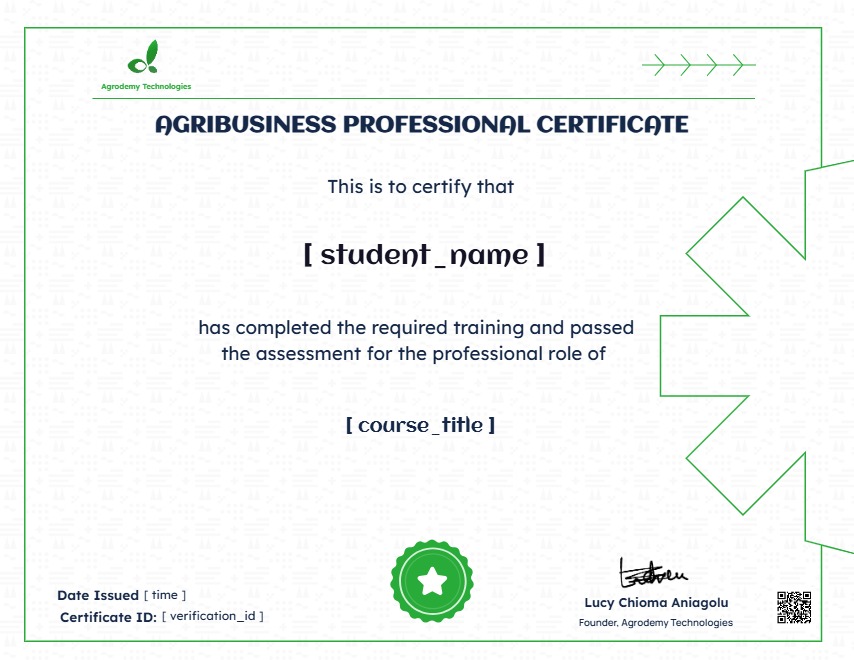
selected template

Student Ratings & Reviews

No Review Yet
No Review Yet

Want to receive push notifications for all major on-site activities?

✕
Select your currency
NGN Nigerian naira
Scroll to Top